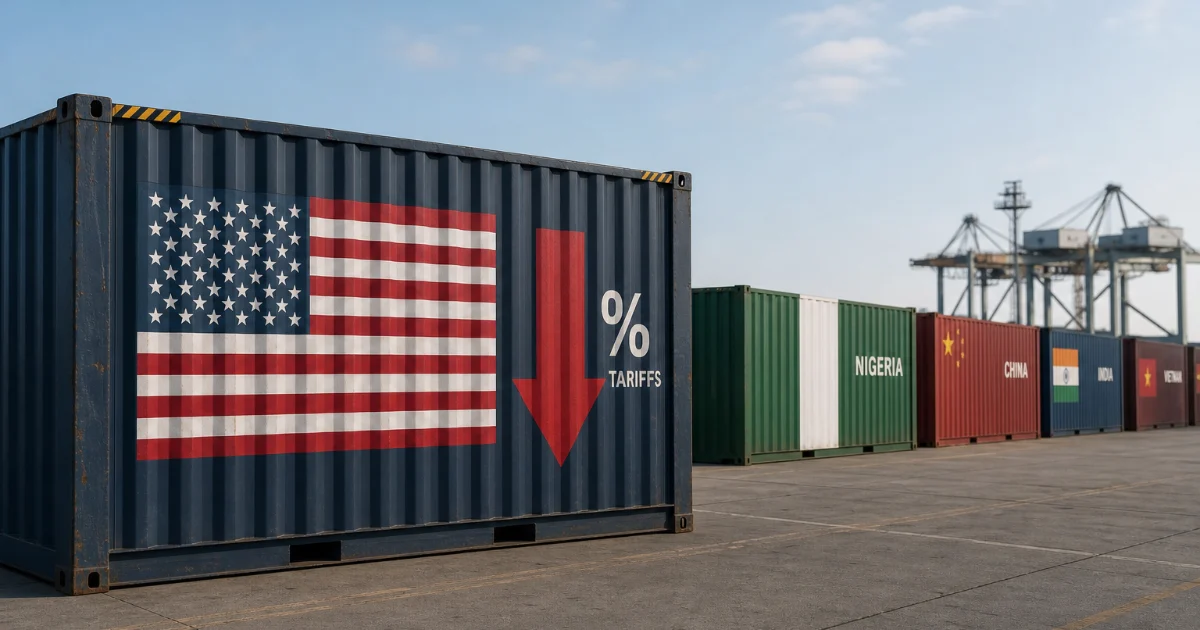
Washington has opened 60 trade investigations into countries it says are not doing enough to keep forced‑labour goods out of their markets. If those governments fail to tighten their rules and enforcement, the US is prepared to hit specific exports with new tariffs.
These areSection 301probes – the same legal tool used for the China tariffs – which means the endpoint can beadditional duties or other trade restrictionson specific products or sectors.
Targets include not just China and the EU but also key emerging markets:Nigeria, South Africa, Egypt, Kenya, India, Vietnam, Brazil, Mexicoand others.
The focus is narrow but potent: whether each country hasclear laws plus credible enforcementto stop forced‑labour goods entering its own market. Where Washington judges the regime weak, it has a legal hook to tax that country’s exports into the US.
For now this isprocess, not tariffs: hearings, written submissions, and bilateral talks run through mid‑year. But markets will start to price in the risk of new duties on exposed product lines (textiles, agriculture, some mining and light manufacturing).
What this means for Nigeria
For Nigeria, the main channels arereputation, compliance cost, and sector‑specific export risk, rather than an immediate macro shock.
Reputational risk:Being on a list of countries examined over forced‑labour enforcement can make US and European buyers more cautious about Nigerian suppliers, especially inagriculture (cocoa, sesame, cashew, rubber), solid minerals, and low‑value manufacturing. Buyers may prefer jurisdictions seen as lower risk even before any US tariff is imposed.
Compliance pressure:Nigerian exporters that sell into US‑linked supply chains should expect:
tougherquestionnaires and contractsfrom buyers;
demands for documented labour audits and traceability down to farm or mine level;
more frequentthird‑party inspectionsand certifications.
That raises costs in the short term but can be a competitive advantage if firms get ahead of the curve.
Tariff exposure:If the US concludes Nigeria’s legal and enforcement framework is weak and Abuja does not offer credible reforms, Washington could:
applyextra duties to specific HS codesdeemed high‑risk – for example certain agricultural or mineral products;
or use the threat of tariffs to securebinding commitmentsfrom Nigeria on import bans, customs screening and labour‑law enforcement.
The risk is concentrated in a few export categories, not the whole trade relationship.
What this means for the rest of Africa
Many African economies sit in a similar position: modest direct exposure to US tariffs overall, but high exposure in a few labour‑intensive sectors.
Countries most at riskare those with:
significant exports oftextiles and apparel(e.g. Ethiopia, Madagascar, Kenya, Lesotho);
largeagricultural and plantation sectors(cocoa, coffee, sugar, palm oil);
and growingmining/critical mineralsexports that rely on artisanal or informal labour.
AGOA and beyond:Even where exports are currently duty‑free under AGOA, new forced‑labour‑linked tariffs could siton topof, or alongside, existing preferences if Washington decides enforcement failures outweigh preference benefits. That would weaken one of the few competitive edges African exporters have.
Supply‑chain reshoring risk:Global brands already face UFLPA‑related seizures in the US. If this new US regime makes compliance in some African markets look too risky, brands may re‑route supply chains to “easier” jurisdictions with stronger documentation, reducingfuture FDI and factory investmentin Africa.
How Nigeria and African exporters can respond
For policy makers:
Tighten and publiciselegal bans on forced‑labour goodsentering domestic markets, not just exports.
Equip customs and labour inspectorates withclear procedures and resourcesto investigate high‑risk sectors.
Engage early with Washington: submit evidence, show enforcement cases, and signal willingness toco‑operate on joint investigations and information‑sharing.
For firms:
Map supply chains down to farm, mine or workshop; identify any points with informal or child labour risk.
Introducewritten supplier codes of conduct, audit clauses, and simple grievance channels workers can actually use.
Keep documentation in export‑ready form so that, if a US buyer or customs asks, you can demonstrate due diligence quickly.
Market takeaway
This is not yet a new tariff wall, but it is acredible, legally loaded threat. For Nigeria and other African economies, the upside is that credible enforcement and transparency can turn a regulatory risk into a selling point; the downside is that inaction could see key export sectors hit with country‑specific US duties just as they are trying to climb global value chains.