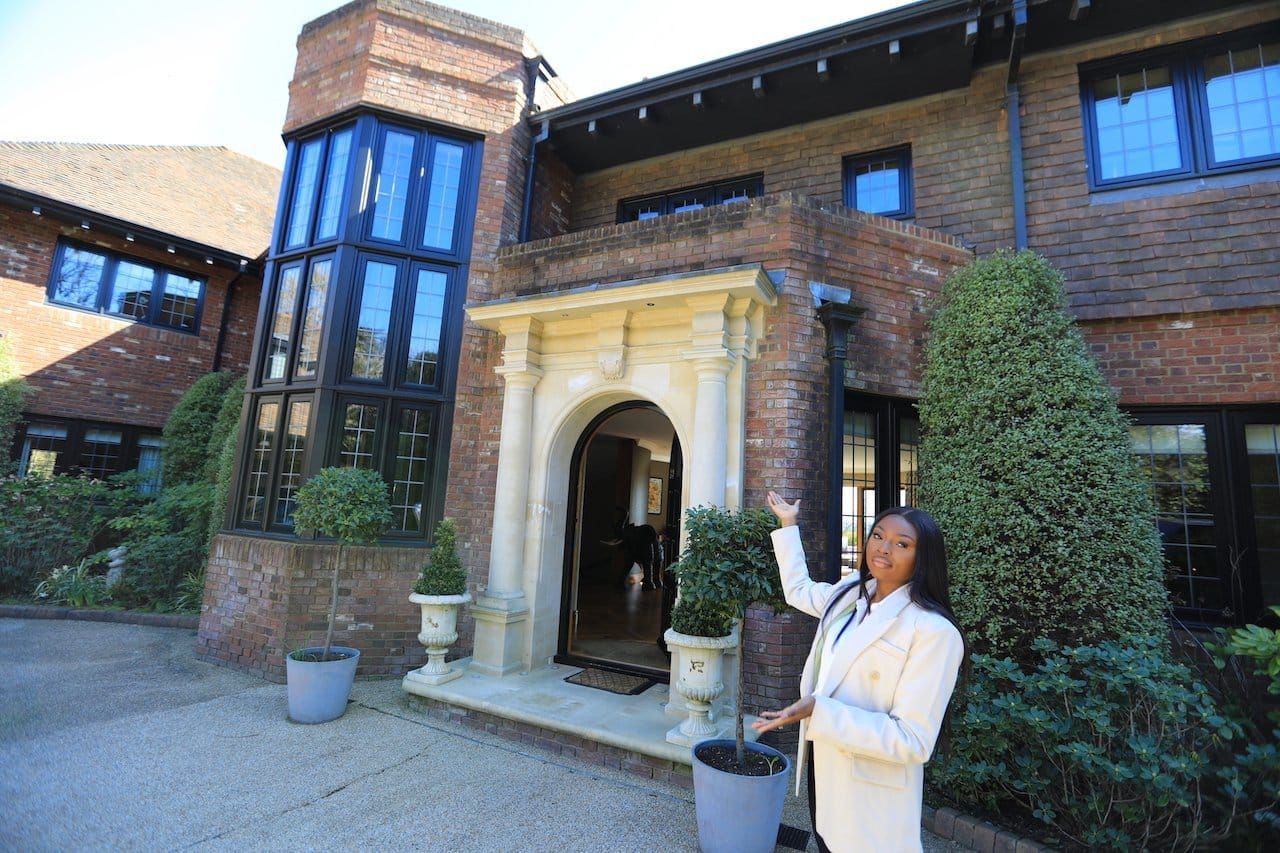
There are people who talk about money, and there are people who have quietly done the work. Patricia Bright sits firmly in the second camp.
She grew up in South London, the daughter of Nigerian immigrants, studied accounting and finance, and started her career in an investment bank and a Big Four firm. She then built one of the UK’s most influential digital platforms on money, careers and lifestyle, reaching millions of people who rarely see themselves reflected in traditional finance media.
Over the last decade, she has layered several achievements on top of each other:
Built a YouTube and social presence with a multi‑million audience.
Partnered with global brands while keeping editorial control over her content.
FoundedThe Break, a platform and podcast focused on closing the gap between where people are financially and where they want to be, with practical content on budgeting, investing and careers.
Assembled a seven‑property portfolio, applying the “buy the worst house on the best street” playbook and executing it successfully.
On her first deal alone, she turned a £310,000 purchase into a £640,000 sale and crystallised a £330,000 gain. That is not theory; it is execution.
In her recent post, she sets this against a very different market reality. She says she now sees comparable London homes listed around £200,000 below their last purchase price, even before:
Stamp duty on additional properties
Section 24 and the loss of full mortgage interest relief
Higher energy bills and compliance costs
Ongoing maintenance and management
Her conclusion is simple and uncomfortable: the “golden era” where easy capital gains bailed out almost any buy‑to‑let strategy has passed. She is not selling everything, but she is reallocating new capital into:
Broad index funds and ETFs
Individual stocks, including names like Nvidia that have delivered outsized, transparent returns
A more diversified portfolio than the one that made her successful in the 2010s
What makes this important is not that she is “anti‑property”. It is that she is willing to:
Acknowledge that the tax and rate environment has structurally changed.
Treat her own success as data, not a religion.
Tell a large, often first‑time investor audience that strategies are not timeless and that loyalty should be to outcomes, not to an asset class.
For young professionals and first‑generation investors, the lesson is bigger than property versus stocks. She took a conventional career, turned a side hustle into a platform, learned property from the inside, and is now using that experience to help others question received wisdom. In a space full of easy slogans about “property always winning”, that mix of execution, transparency and willingness to pivot is unusually honest.
If you are building your own plan, her path is a useful template: learn a real skill, start small, execute, review the data honestly, and do not be afraid to pivot when the world changes; even if the old strategy made you successful.