Executive Summary
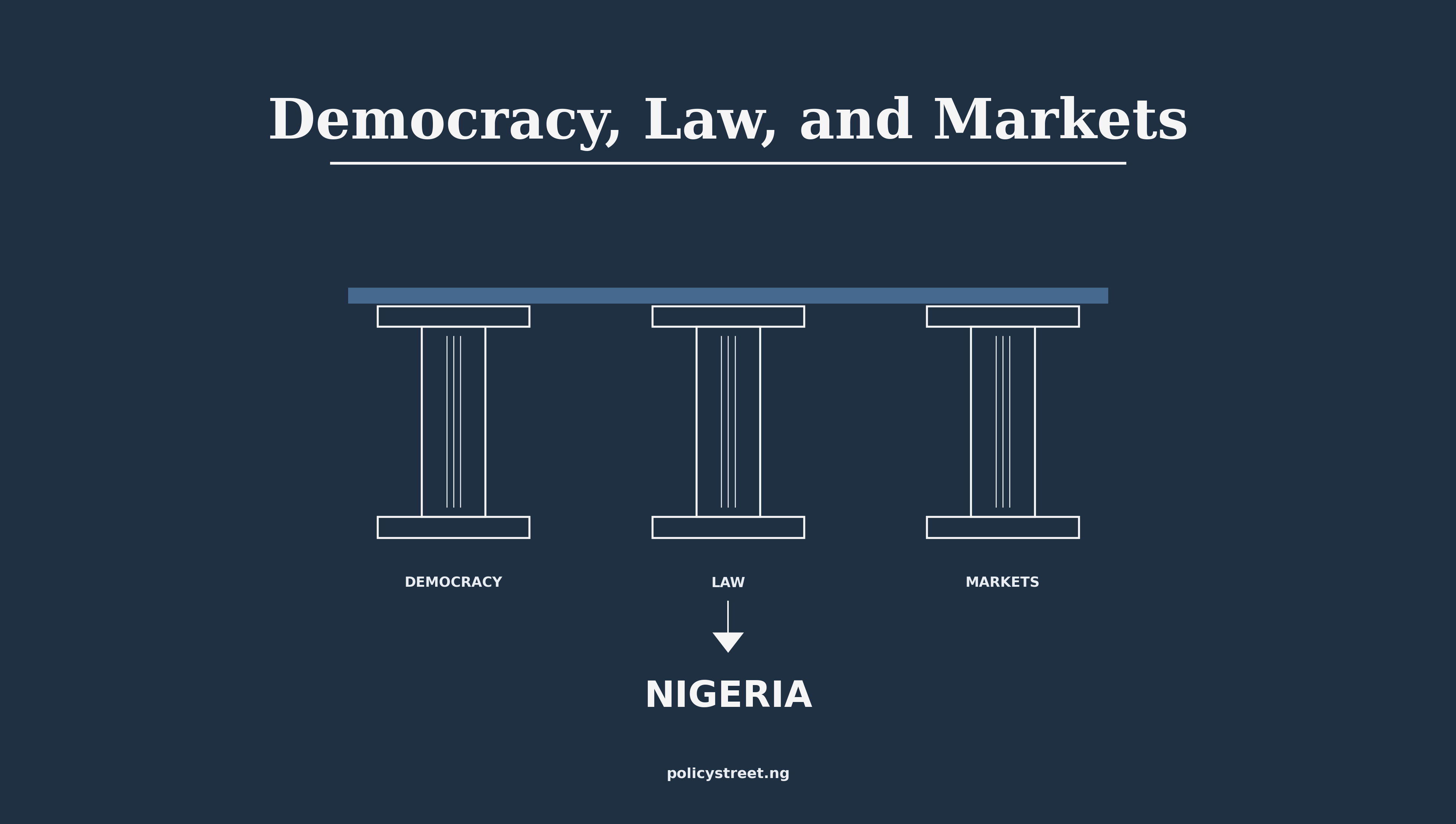
In Nigeria, the economic impact of election cycles cannot be understood through economics alone. Legal institutions, policy credibility, and market behaviour are deeply interwoven. Periods of heightened political mobilisation often expose weaknesses – or strengths – in legal frameworks, regulatory certainty, and policy enforcement. This article argues that economic volatility during elections is not driven primarily by political competition, but by how effectively legal and policy institutions manage transitions. Where the rule of law, policy clarity, and institutional continuity are preserved, political mobilisation can reinforce economic confidence rather than undermine it.
1. Elections as Legal, Policy, and Economic Stress Tests
Elections in Nigeria function simultaneously as:
Legal tests of constitutional order, judicial independence, and dispute-resolution mechanisms
Policy tests of fiscal discipline, regulatory continuity, and administrative capacity
Economic tests of investor confidence, currency stability, and household welfare
Markets respond not to political rhetoric, but to signals about whether laws will be enforced, contracts honoured, and policies applied consistently after elections.
In this sense, election periods are moments when the legal–policy–economic nexus becomes most visible.
2. Rule of Law and Economic Confidence
The rule of law plays a central role in shaping economic behaviour during political transitions. Investors, businesses, and households assess not only who governs, but how power is exercised within legal constraints.
Key legal factors influencing economic confidence include:
Predictability of court processes in resolving electoral and commercial disputes
Independence of regulatory agencies from political interference
Enforcement of contracts and property rights during transitions
The World Bank’s Worldwide Governance Indicators consistently show strong correlations between rule-of-law scores and investment outcomes. In Nigeria, perceived legal uncertainty during election periods often translates into delayed investment and capital outflows – not because of politics per se, but because of doubts about institutional enforcement.
3. Policy Credibility as the Bridge Between Law and Markets
Public policy serves as the bridge between legal authority and economic outcomes. During election cycles, policy credibility becomes especially important.
Three policy areas are particularly sensitive:
3.1 Fiscal Policy
Election periods often coincide with increased public spending pressures. Without clear legal and fiscal frameworks, such spending can raise concerns about deficits, debt sustainability, and post-election adjustment. Markets respond negatively when fiscal policy appears politically driven rather than rule-based.
3.2 Monetary and Exchange-Rate Policy
Data from the Central Bank of Nigeria (CBN) indicate that foreign exchange volatility often increases around elections. This reflects uncertainty about policy continuity, central bank independence, and post-election macroeconomic priorities. Where legal safeguards for monetary institutions are credible, exchange-rate pressure tends to ease more quickly after elections.
3.3 Regulatory Policy
Sectors such as energy, infrastructure, and telecommunications depend on predictable regulation. Election-related uncertainty about regulatory enforcement can delay projects and reduce investor appetite, even in the absence of formal policy changes.
4. Economic Transmission Channels During Political Transitions
The interaction of law and policy shapes key economic channels:
Exchange rates: Legal and policy uncertainty reduces capital inflows, weakening the currency.
Inflation: Currency pressure feeds into higher import prices, affecting household welfare.
Investment: Uncertainty over post-election legal and regulatory frameworks delays capital formation.
These channels explain why election periods often have tangible economic effects even before any formal change in government occurs.
5. Demographics, Legal Expectations, and Economic Behaviour
Nigeria’s youthful population adds a structural dimension to the law–policy–economics relationship. Young people’s political engagement reflects expectations not only of leadership change, but of fairness, legal inclusion, and economic opportunity.
When legal institutions are perceived as weak or selective, raised political expectations may translate into:
Reduced trust in formal economic systems
Increased migration and skills flight
Lower long-term investment in domestic human capital
Conversely, credible legal reform and policy follow-through can strengthen labour-market participation and productivity.
6. International Perspective: Institutions Matter More Than Politics
International development institutions consistently emphasise that institutional quality outweighs political competition in determining economic outcomes. The International Monetary Fund (IMF) has highlighted that Nigeria’s macroeconomic adjustment efforts are closely linked to policy credibility and institutional coherence, particularly during political transitions.
From a global perspective, investors and partners focus on:
Whether legal processes are respected
Whether policy frameworks survive political change
Whether institutions constrain discretion and uncertainty
Nigeria’s regional importance amplifies these considerations, as instability has spillover effects across West Africa.
7. Policy Implications
Three interlinked policy lessons emerge:
Strengthening the rule of law is an economic stabiliser. Legal certainty reduces election-related volatility.
Policy rules matter more than policy promises. Markets respond to frameworks, not rhetoric.
Institutional continuity anchors expectations. Independent courts, regulators, and monetary authorities are central to economic resilience.
Economic stability during political transitions is achieved not by suppressing political participation, but by embedding it within strong legal and policy institutions.
8. Conclusion
In Nigeria, law, policy, and economics converge most sharply during election periods. Political mobilisation exposes institutional strengths and weaknesses, with direct consequences for markets, investment, and household welfare. The economic effects of elections are therefore not inevitable outcomes of democracy, but reflections of how well legal frameworks and policy institutions manage political change.
When the rule of law is respected and policy credibility maintained, democratic participation can reinforce economic confidence. Where these foundations are weak, uncertainty persists. The challenge for Nigeria is not political engagement itself, but ensuring that law and policy translate civic participation into economic stability and long-term development.
References
Central Bank of Nigeria (CBN). Statistical Bulletin; Quarterly Economic Reports.
International Monetary Fund (IMF). Nigeria: Article IV Consultation – Staff Reports.
World Bank. Nigeria Development Update; Worldwide Governance Indicators.