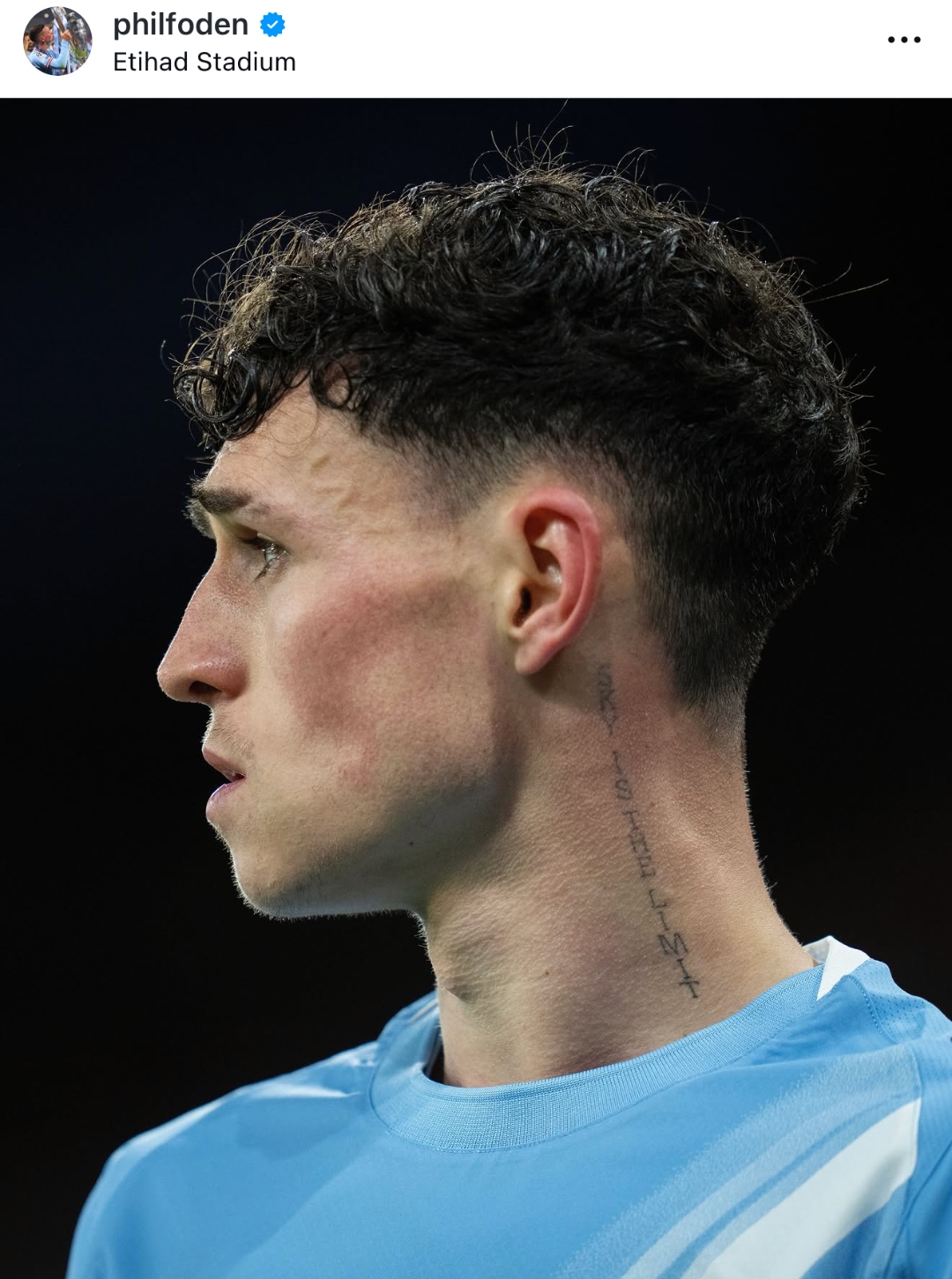
Phil Foden!
There is a moment in football that every fan recognises. A match is tight, both teams are level, the clock is ticking, and someone on the pitch does something that no one else on the field could have done. A turn in a small space. A pass nobody else saw. A goal from nowhere. That moment usually belongs to the most creative player on the pitch. At this World Cup, England left their most creative player at home.
Phil Foden did not travel to the 2026 World Cup. Thomas Tuchel, England's manager, announced his 26-man squad on 22 May 2026 and Foden's name was not on the list. Neither was Cole Palmer's. Neither was Trent Alexander-Arnold's. For a tournament held on home soil in North America, with England expected to compete for the title, those were three very large names to leave behind.
What kind of player is Foden?
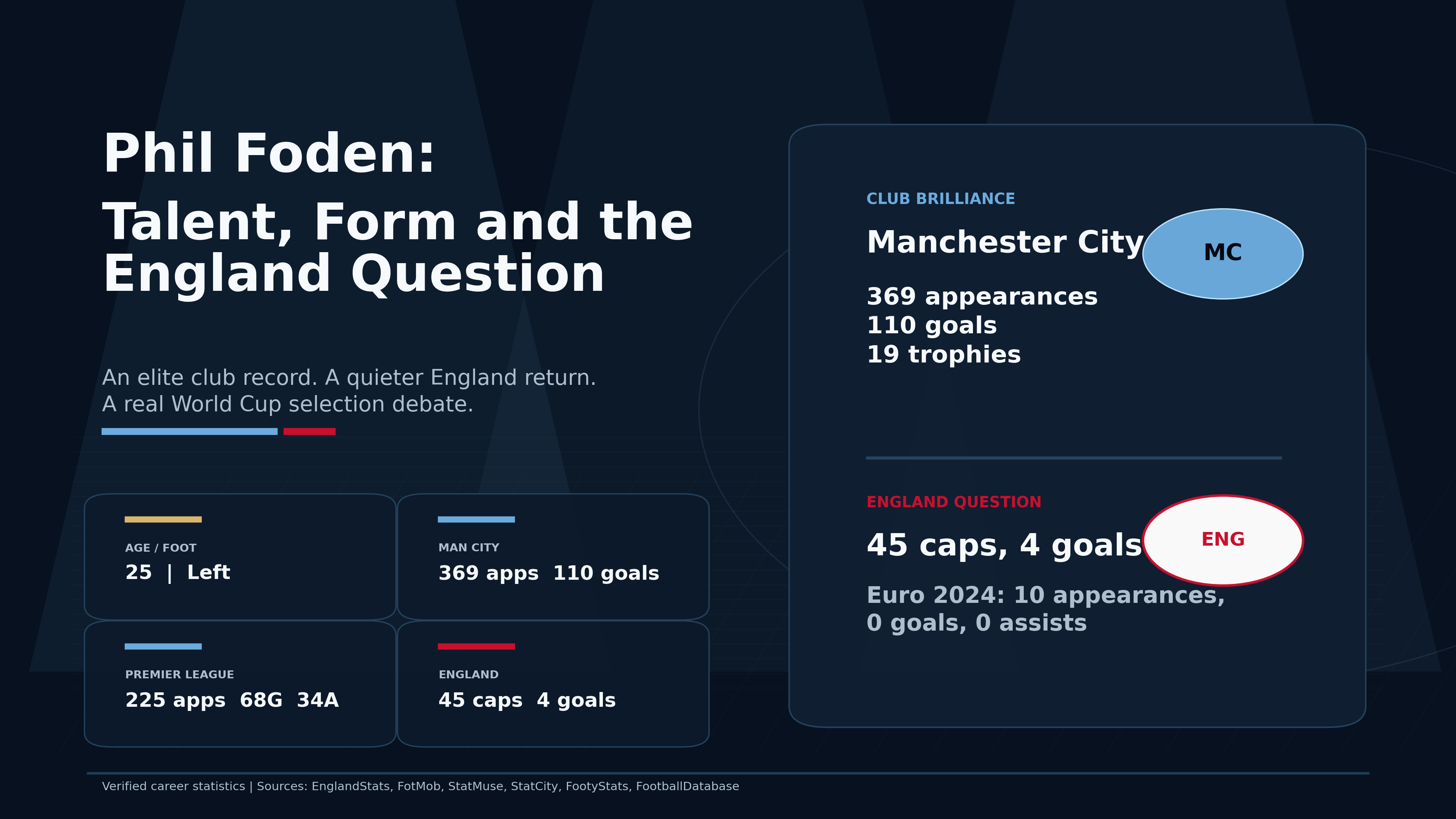
To understand what England may have missed, you need to know what Foden actually does on a football pitch. He is not a typical winger who runs fast and crosses the ball. He is not a striker who lives in the penalty box. He is something rarer and harder to replace: a player who can receive the ball in tight spaces, turn away from defenders, find angles that do not look like they exist, and create goals or score them in equal measure.
At Manchester City, Pep Guardiola – one of the best football managers in history – has described Foden in simple terms: "I have zero, zero, zero doubts about Phil." That is not the kind of thing a manager says about a player who is merely good. It is the kind of thing you say about a player who solves problems that other players cannot.
In the Euro 2024 tournament just two years ago, Foden and Cole Palmer were central to England reaching the final. They were not just in the squad — they were the players who made things happen when nothing else was working.
Why was he left out?
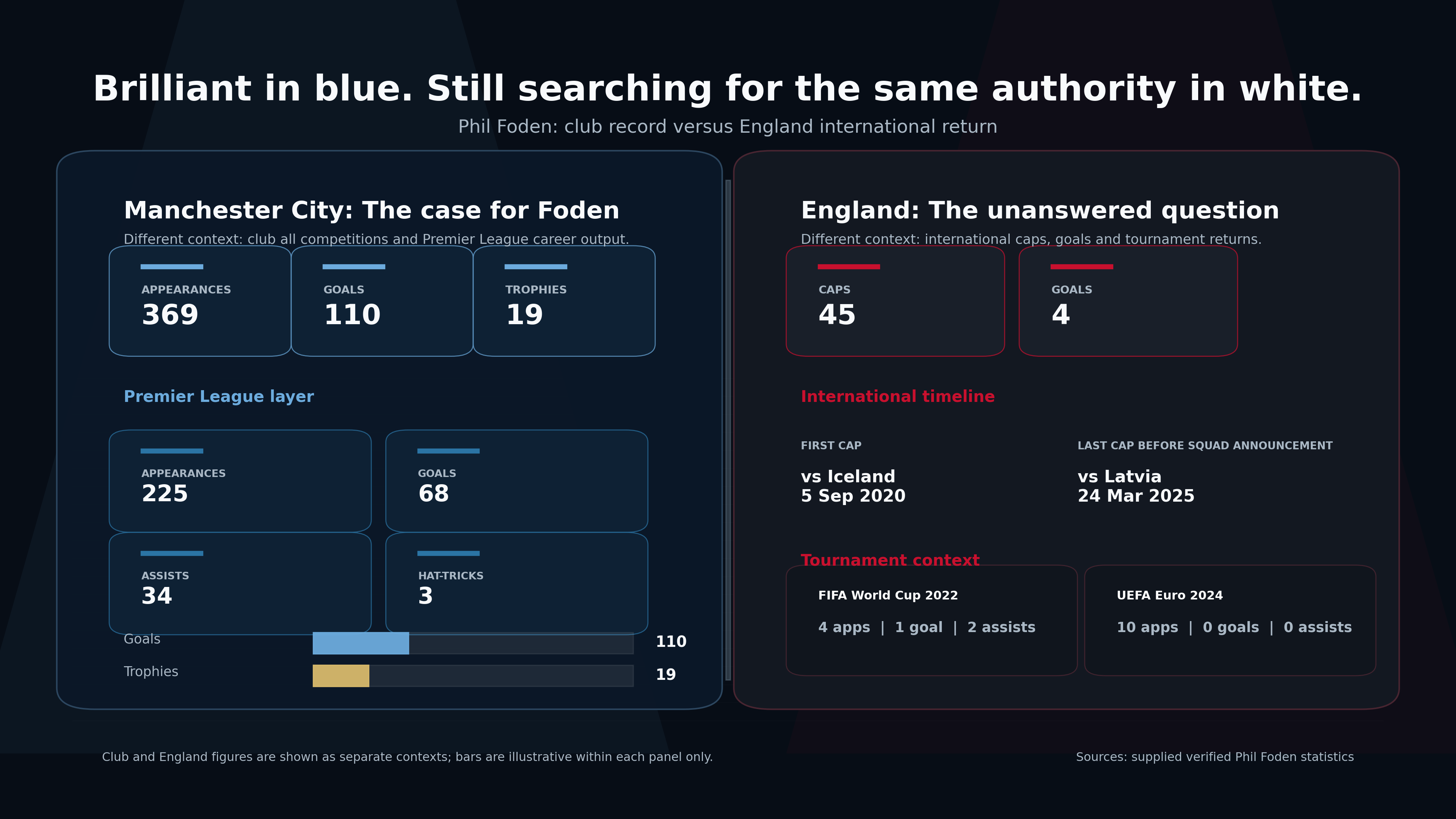
Foden had a difficult season at club level. He picked up injuries – a broken bone in his hand in January, an ankle scare in a friendly against Uruguay in March – and his form for Manchester City was not consistent. By the time Tuchel made his squad decisions, Foden had started only four of City's previous fifteen matches and had not scored since December.
Tuchel gave Foden chances in England friendlies before the tournament but was direct about what he saw. "He was excellent in training camp but struggles on the pitch," the manager said. "He hasn't had many minutes with City lately." In the end, Tuchel chose players who were in better rhythm – Eberechi Eze, Morgan Rogers, Jude Bellingham – over a player whose talent was beyond question but whose recent form was not.
That is a fair argument. You cannot pick a player on reputation alone. But it is not the only argument.
The case for taking him anyway
Here is the counter-argument, and it is a strong one.
World Cups are not decided in the group stage. They are decided in knockout rounds, when teams are evenly matched, when defences are well organised, when goals are hard to come by. In those moments, what a team needs is not a player in rhythm. What it needs is a player who can do something unpredictable – something that the defender marking them has not prepared for.
That is Foden's speciality.
England's results at this tournament have shown both what the team can do and where it runs out of ideas. A 4-2 win over Croatia showed attacking quality. A 0-0 draw with Ghana suggested that when a well-organised team sits deep, England can struggle to find a way through. It is precisely in those situations – tight game, stubborn defence, the ball moving sideways – where Foden's ability to play in small spaces and create something from nothing becomes most valuable.
He is also a left-footed player who can operate between the lines in a way that right-footed players simply cannot replicate. Defenders who have spent a week preparing for England know how Bellingham moves, how Saka cuts inside, how Kane drops deep. They have not had to prepare for Foden. The unpredictability alone has a value that does not show up in pre-tournament form tables.
The comparison that matters
Think of it this way. Imagine you are writing an important exam. You have been preparing for months and your writing has been steady and reliable. But you also have a pen – your best pen – that sometimes skips on the page. Other days it writes beautifully, better than anything else you own.
Do you leave it at home because it has been skipping lately? Or do you take it with you, because if it works on the day, nothing else comes close?
Tuchel left the pen at home. The exam is the World Cup.
What Foden himself said
Before the squad announcement, Foden had spoken about wanting to get "back to where I was at the start of the season" – a sign that even he knew his form had dipped and that he was fighting to rediscover himself. He was not asking for sympathy. He was acknowledging reality and working to change it.
That honesty, combined with his talent, is exactly the kind of thing that makes a player valuable in a squad even when they are not the automatic starter. The best squads at tournaments are not made up of 26 first choices. They are made up of players who can change a game from the bench, shift the dynamic, and offer something different when the team is stuck.
Foden could have been that player.
The bigger picture
None of this is a criticism of the players who are there. Bellingham, Saka, Eze, Rashford and the rest are real quality. England went to this World Cup with genuine ambition and a squad that many teams would envy.
But ambition and potential are not the same as winning. At some point in a knockout tournament, when a game is level and ninety minutes are not enough, a manager reaches into the bench and needs to find something different. On that bench, at this World Cup, there is no Phil Foden.
He is twenty-six years old. He is one of the most talented English footballers of his generation. He played a major role in getting England to a European final two years ago.
And he is watching this World Cup on television.
That, more than anything, is the argument. Not that Tuchel was wrong to want form. But that there are some players whose talent is large enough that you find a way to take them anyway.
Foden is one of those players. England will find out whether they needed him soon enough.