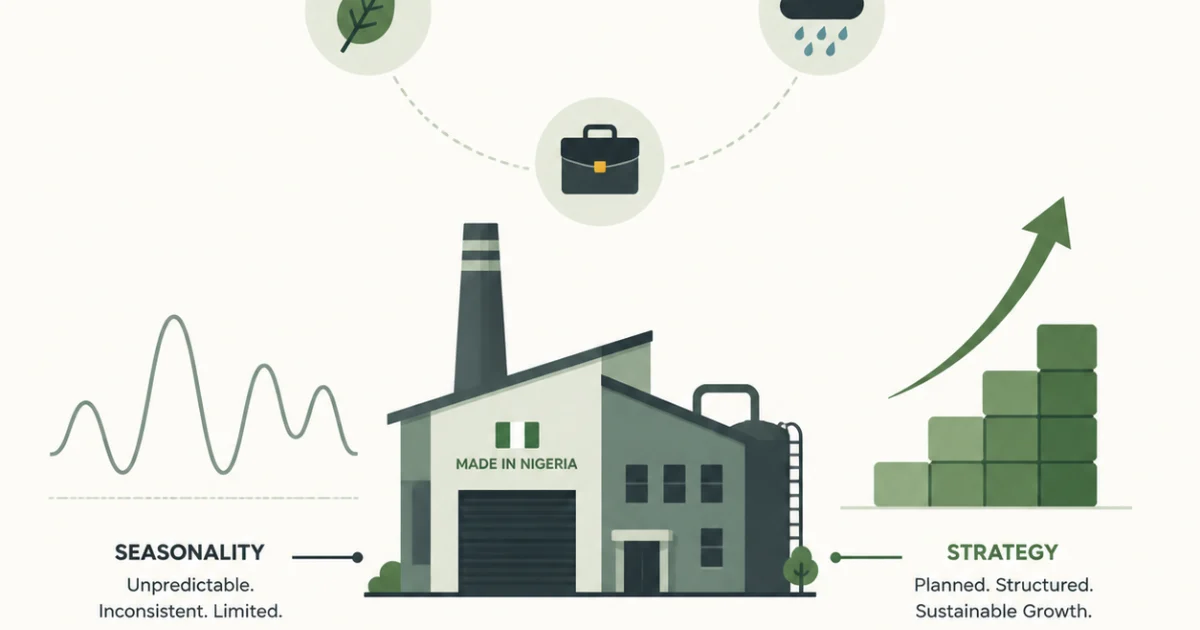
In Nigeria, like many other similar countries, many firms face a deeper strategic question than “What sector am I in?”
The real question is:How tightly should my business be tied to the global economy, given my macro environment and my balance sheet?
In practice, that choice usually appears in three broad configurations.
1. The configuration ladder
Configuration 1 — Purely domestic
Firms that buy and sell almost entirely within the local economy.
●Day-to-day costs are mostly insulated from foreign exchange movements.
●But the firm has limited access to imported inputs, technologies, and product variety.
Configuration 2 — Domestic importer
Firms that sell locally but import part of their inputs or products.
●Access to global goods can improve productivity and margins.
●But FX shocks now feed directly into costs and working capital.
Configuration 3 — Foreign-linked
Firms that operate as part of multinational groups or under foreign ownership.
●Often the most productive, because they plug into global brands, systems, and capital.
●But exchange-rate movements, profit-repatriation rules, and decisions by foreign owners directly affect the firm’s survival.
Research on firms across countries finds a consistent pattern:
●Businesses that only buy and sell locally tend to have the lowest productivity.
●Firms that import some inputs usually perform better.
●Firms integrated into multinational groups typically have the highest capabilities.
But moving up that ladder also changes therisk profile, particularly around FX exposure, policy shifts, and the ability to move profits across borders.
2. Shoprite on the ladder
Shoprite’s experience in Nigeria illustrates how firms move along this ladder.
Phase 1 — Entry (Configuration 3)
Shoprite entered Nigeria through a South African–controlled subsidiary.
It brought modern supermarket formats, centralised procurement, and a global retail brand. The Nigerian operation functioned as a classic configuration-3 affiliate: a multinational structure operating in a volatile domestic macro environment.
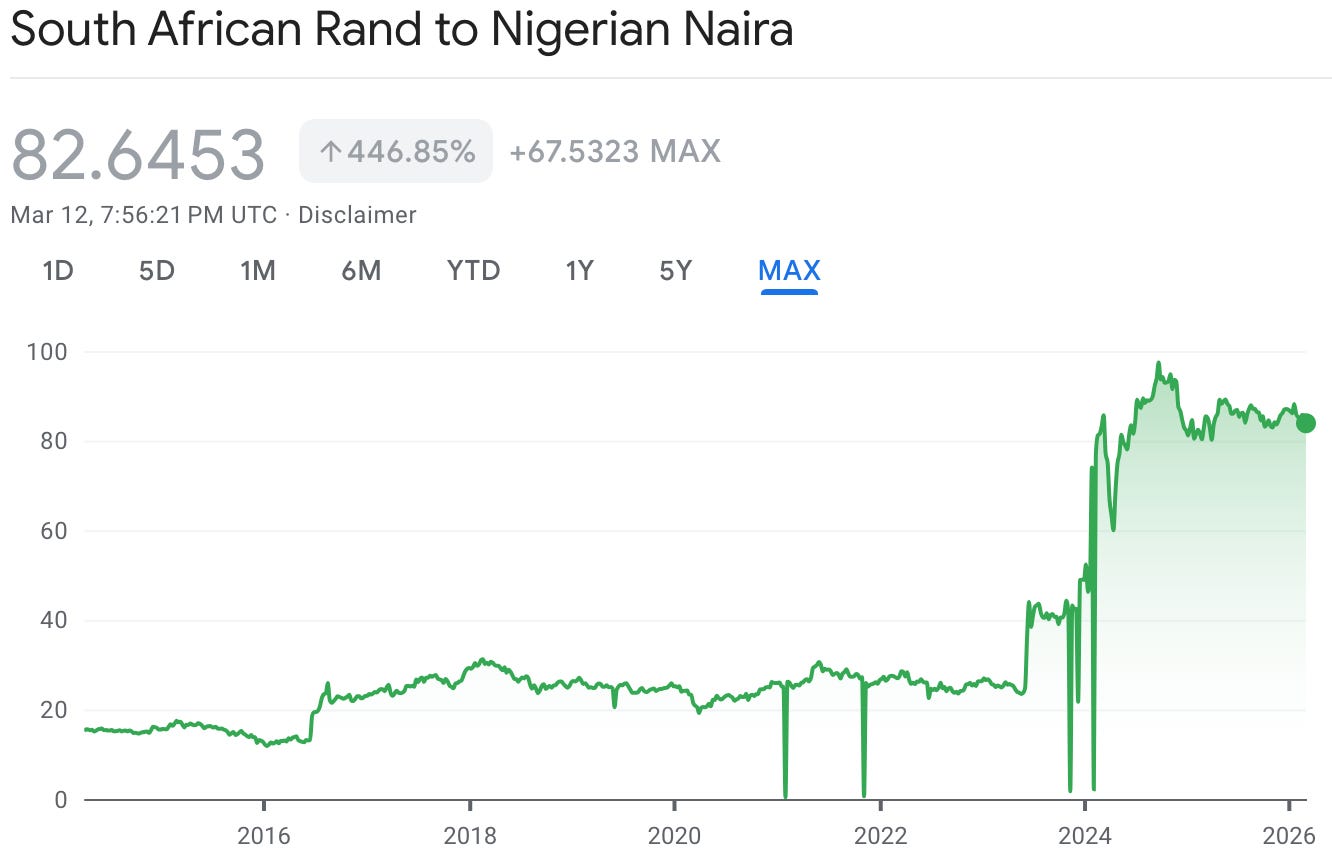
Shareholders thought in rand. Operations ran in naira.
The business had to navigate Nigerian infrastructure constraints, currency devaluations, FX shortages, and policy shifts.
Phase 2 – Local sourcing (still mainly 3, with more 1-style inputs)
By 2017, Shoprite reported that more than 80 percent of its products in Nigeria were sourced locally under its “Made in Nigeria” programme.
The goal was practical:
●reduce dependence on FX
●keep shelves stocked under import constraints
●respond to pressure to support domestic production
Some imported categories remained, but the supply chain became more locally anchored.
Phase 3 – Exit and franchise (towards 2/1)
By 2020–2021 the group cited several pressures:
●FX shortages
●difficulty repatriating profits
●currency depreciation
●supply-chain friction
●high operating costs
●weak returns
Shoprite sold 100 percent of its Nigerian subsidiary to Ketron Investments while maintaining a franchise and services relationship.
Operationally, the stores moveddown the ladder.
What had been a configuration-3 multinational affiliate became a hybrid:
configuration 2: a local owner operating a foreign brand under licence
configuration 1: a heavily naira-based supply chain
The FX and policy risks shifted from the South African parent’s balance sheet to Nigerian investors.
3. Did localisation “kill” Shoprite?
Local sourcing was not the main problem.
The larger pressures wereFX constraints and format economics.
Several factors mattered:
FX controls and illiquidity:Repatriating profits became difficult. Naira earnings effectively turned into trapped cash, and rand-denominated returns shrank as the currency depreciated.
Import restrictions and FX scarcityImported products became harder to obtain, reducing assortment.
Operating costsPower, logistics, security, and particularly mall rents remained high in a weak consumer-income environment.
Local sourcing was aresilience strategy. It reduced FX exposure and helped keep shelves stocked.
But it could not resolve structural constraints such as FX controls, currency depreciation, hard-currency-linked leases, or the return expectations of a multinational parent.
Even after the ownership change, the new operators maintained heavy local sourcing as part of the turnaround.
4. Formats, leases, and the ceiling
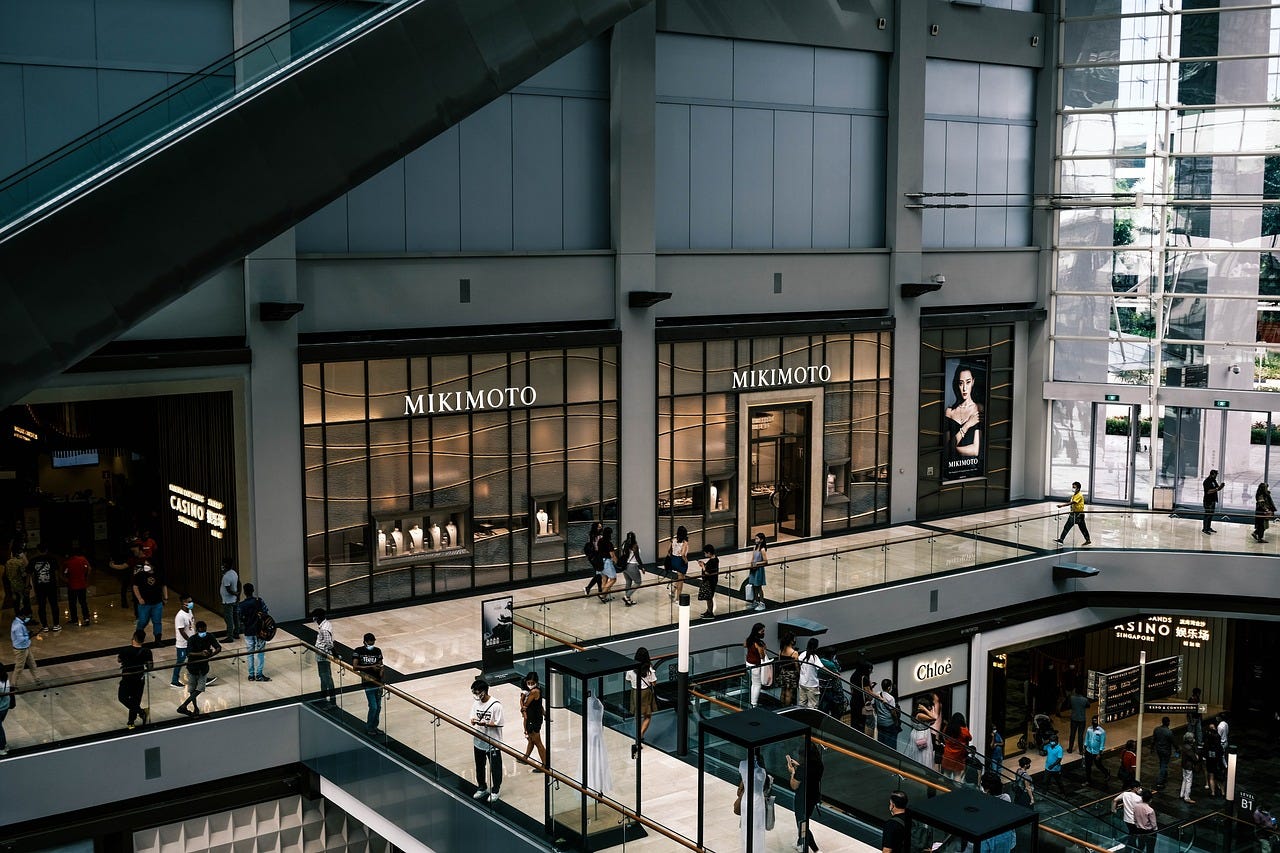
Mall-anchored supermarket formats carried high fixed costs.
Many rents were linked, directly or indirectly, to hard-currency financing, while revenues were earned in naira.
During devaluation cycles, this creates a squeeze:
●naira operating costs rise
●the real burden of leases increases
●.customer purchasing power weakens
Some inputs can be localised.
Bread and vegetables can be sourced locally.
A dollar-anchored lease cannot be localised.
Neighbourhood retail chains with naira-denominated leases, smaller stores, tighter assortments, and heavier domestic sourcing sit lower on the configuration ladder.
They face fewer FX and lease risks, though they also lack many multinational-scale advantages.
5. What this means
The strategic question for firms is not whether local versus foreign – both can be profitable. The question is whether the structure of the business matches the macro environment.
As firms move from domestic → importer → foreign-linked, they often gain productivity and scale. But they also import FX risk, policy risk, and repatriation constraints into their balance sheets.
Shoprite’s path in Nigeria shows that even a capable multinational can find its model misaligned with the surrounding macro conditions.
In that situation, the adjustment may not be about sourcing or operations.
It may require a change in ownership, financing, or the position the business occupies on the ladder itself.